

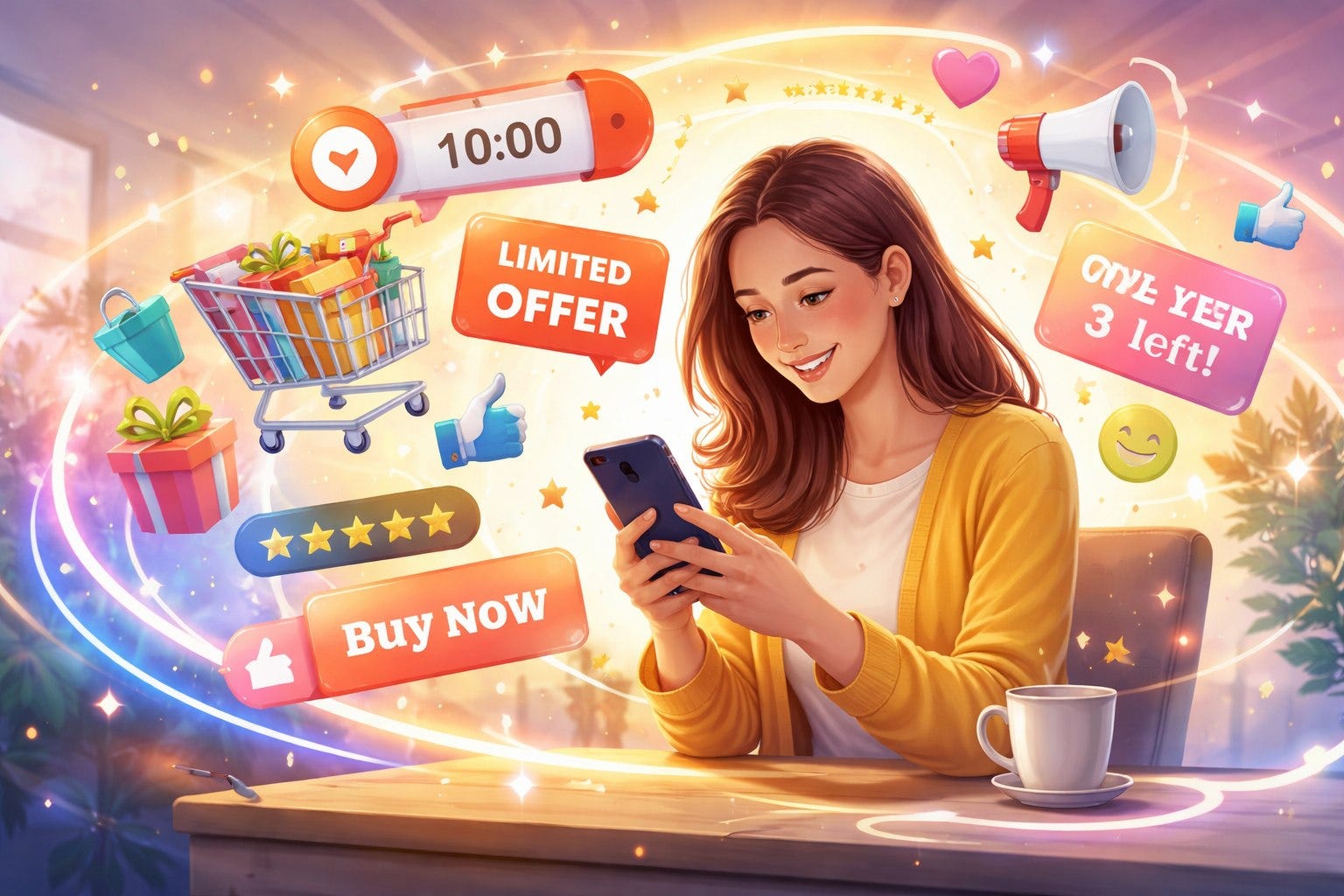
Somewhere between the “Add to Cart” click and that inevitable cha-ching sound of purchase confirmation lies a complex cocktail of psychology, emotion, and instinct. It’s not magic — it’s deeply rooted human behavior. Every day, millions of online shoppers fall under the influence of subtle mental triggers that push them from curious browsers to paying customers. These triggers tap into instincts honed over millennia, repurposed by savvy marketers to accelerate decisions in a digital marketplace awash with choice.
But what are these psychological mechanisms? Why does “Only 3 left!” make you move fast? 🤔 And is it real fear — or just really persuasive copy? Today, we break down the seven most potent triggers that make people hit Buy Now instantly. These aren’t hunches; they’re backed by research into consumer behavior, cognitive bias, and marketing science from multiple credible sources.
1. Scarcity — The Fear of Missing Out 🕰️
Picture this: you’re eyeing that sleek pair of sneakers. A tiny banner flashes: 10 left in stock. Suddenly, you care more about quantity than quality. That’s scarcity in action. Humans hate losing opportunities more than we like gaining them — a bias deeply rooted in survival instincts. Scarcity triggers FOMO (fear of missing out), tempting shoppers to act immediately rather than risk regret.
In online commerce, scarcity can take many forms — low inventory warnings, limited-time deals, and exclusive releases all make people feel like they must act now or never. It’s a twist on primal survival logic — opportunities don’t always come back.
2. Social Proof — “Everyone’s Doing It” 🧑🤝🧑
Humans are social animals — we copy behavior because it’s safer than flying blind. In e-commerce, social proof is everywhere: star ratings, customer testimonials, most popular labels, and user-generated photos. These cues whisper (or shout), look how many people have already chosen this.
Our brains interpret popularity as a proxy for trust and quality. If thousands of others think it’s worth buying, maybe you should too. This isn’t just clever psychology — it’s human nature.
3. Reciprocity — Give a Little, Get a Lot 🎁
Reciprocity is that warm, fuzzy rule from social psychology that says: If someone gives you something, you feel compelled to give back. That’s why brands offer free trials, e-books, or discounts upfront. Once a user receives perceived value for free, they’re psychologically nudged to reciprocate — often with a purchase.
It’s an artful blend of generosity and subtle persuasion that taps into a deep social instinct — we don’t like feeling indebted, so we act to balance the scales.
4. Authority — Trust the Experts 📜
People tend to trust figures of authority — a principle Robert Cialdini famously identified in Influence: The Psychology of Persuasion. In marketing, authority can come from expert endorsements, media features, professional reviews, or recognizable certifications.
When a product is backed by credibility, our brains register it as legitimate and safe. It’s the difference between a generic ad and, “As featured in Forbes.” This isn’t just persuasive; it’s confidence-building.
5. Urgency — Act Now 🏃♂️💨
Urgency isn’t just about scarcity — it’s about time pressure. Countdowns, flash sales, and today only offers trigger a sense of immediate action. Time-limited deals activate our brain’s alarm system: Don’t wait. Decide now. Marketers know this well; urgency lights up the same dopamine pathways that reward quick action, making Buy Now feel like the right move before the deal disappears.
This trigger blends rational urgency with emotional impulses — a powerful recipe for conversions.
6. Loss Aversion — The Pain of Missing Out Hurts More Than the Pleasure of Gaining 🎯
There’s a reason we cringe at losing $20 more than we celebrate finding it. According to behavioral economics, humans fear loss more than they value equivalent gains. Marketers leverage this by framing choices not just as positive opportunities, but as potential losses: Last chance to save! Don’t miss this.
This subtle shift in framing turns hesitation into action — because avoiding loss feels more urgent than earning a reward.
7. Simplicity — Too Many Choices = Decision Paralysis 🧩
Choice overload is real. When people face too many options, they stall and leave without buying. Simplifying the path from interest to purchase — fewer steps, cleaner options, a single clear CTA — removes friction and boosts conversions. This isn’t a flashy trick; it’s a user-experience principle rooted in cognitive ease.
When buying feels easy, people buy. Simple.
Also read: 7 Call-to-Actions That Actually Get Clicks (and Sales)
Closing Thoughts: Why These Triggers Matter 🧠💡
These psychological triggers don’t just influence purchases — they reveal the hidden architecture of human decision-making. Online marketplaces aren’t sterile shopping experiences; they’re stages for deeply human impulses. From scarcity to social proof, these triggers speak to primal instincts and social wiring that transcend pixels and code.
Now here’s the twist: Ethical use matters. These triggers work best when they respect customers rather than manipulate them. Responsible brands harness psychology to improve experience, build trust, and serve real needs — not just sell for the sake of selling.
So think about your own experiences. What makes you click “Buy Now”? 🛍️